
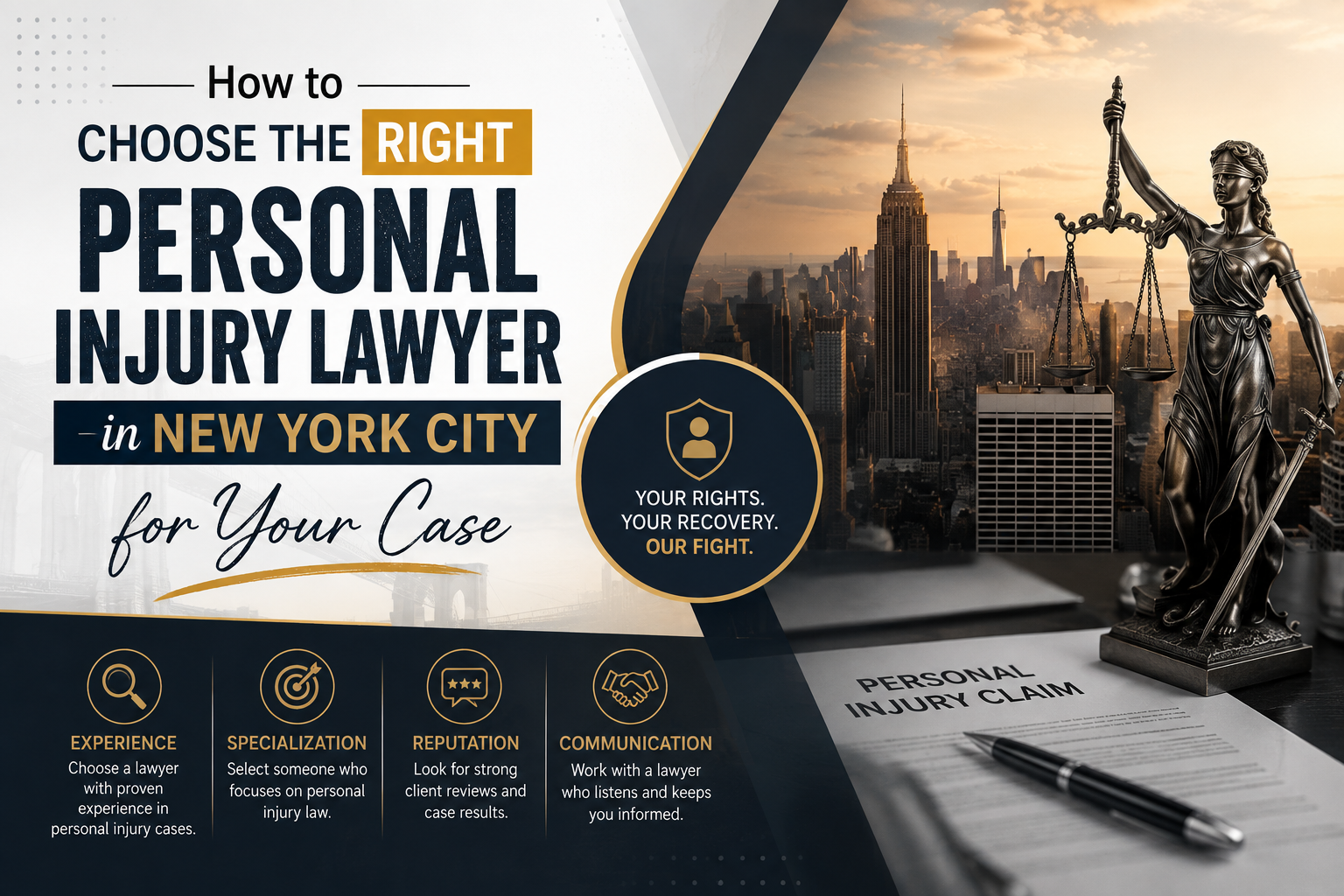
Choosing an attorney after a serious injury is a decision most people make under stress, on a compressed timeline, and without much prior experience evaluating law firms. That combination makes it easy to sign with the first firm that answers the phone or runs the most television ads — which is not always the firm best equipped to handle your specific case. New York City’s personal injury landscape is shaped by a distinct set of state laws, court procedures, and borough-by-borough court cultures that a good personal injury lawyer in New York City should understand thoroughly before you ever sign a retainer. Whether you’re dealing with a straightforward slip-and-fall or a personal injury wrongful death claim on behalf of a family member, the stakes make this one decision worth slowing down for.
Understand the Legal Framework Your Case Will Fall Under
Before evaluating attorneys, it helps to understand the basic legal rules that will govern your claim, since a knowledgeable attorney should be able to explain exactly how each applies to your situation. This is true whether you’re pursuing a routine injury claim or a personal injury wrongful death case, since the underlying framework — filing deadlines, fault rules, and notice requirements — shapes both.
| Legal Rule | Statute | What It Means for You |
|---|---|---|
| Statute of Limitations | CPLR § 214 | 3 years from the date of injury for most negligence claims |
| No-Fault Insurance / Serious Injury Threshold | Insurance Law Article 51; § 5102(d) | Determines when you can sue beyond basic no-fault medical benefits |
| Comparative Negligence | CPLR § 1411 | Your damages are reduced, not barred, by your own percentage of fault |
| Scaffold Law (Construction Injuries) | Labor Law §§ 240, 241 | Imposes strict liability on owners/contractors for elevation-related job site injuries |
| Claims Against a City or Municipal Agency | General Municipal Law § 50-e, § 50-i | Requires a notice of claim within 90 days and suit within 1 year and 90 days |
New York is a no-fault state for most car accident injuries, meaning your own auto insurer pays initial medical bills and lost wages regardless of fault. You can only sue the at-fault driver if your injury meets the ‘serious injury’ threshold defined in Insurance Law § 5102(d) — a distinction that trips up many injured New Yorkers who assume they can sue immediately.
What Actually Separates a Strong Attorney From an Average One
Advertising budgets and office size tell you very little about how a firm will actually handle your case. Not all injury law lawyers are equally equipped for every type of claim, so these five factors matter far more than a firm’s marketing budget.
| What to Evaluate | How to Evaluate It | Why It Matters |
|---|---|---|
| Case-Specific Trial Experience | Ask how many cases like yours the attorney has actually tried, not just settled | A firm that has never gone to trial has less leverage in settlement talks |
| Contingency Fee Structure | Confirm the percentage and whether it changes at different case stages | Most NYC personal injury attorneys work on a standard 1/3 contingency fee |
| Access to Medical & Expert Resources | Ask who will evaluate your injuries: in-house staff or outside experts | Strong expert testimony is often what separates a good result from a great one |
| Case Load & Personal Attention | Ask who will actually handle your file day-to-day | High-volume firms sometimes hand cases entirely to case managers |
| Local Court Familiarity | Ask about experience in the specific county where your case will be filed | Bronx, Kings, New York, Queens, and Richmond Counties each have distinct court cultures and jury tendencies |
How Contingency Fees Work in New York
Almost all NYC personal injury attorneys work on a contingency basis, meaning you pay nothing upfront and the firm only gets paid if you recover money. In medical malpractice cases, New York court rules (22 NYCRR § 603.7 and similar provisions in other departments) impose a sliding-scale fee cap that decreases as the recovery amount increases. In most other personal injury matters, a standard one-third contingency fee is typical, though the exact terms should always be spelled out clearly in a written retainer agreement before you sign.
Questions to Ask During Your Initial Consultation
Most lawyers for personal injury cases offer a free initial consultation, which is your best opportunity to evaluate fit before committing to a retainer. Come prepared with direct questions, including:
- How many cases similar to mine have you handled, and what were the outcomes?
- Will you personally handle my case, or will it be assigned to another attorney or case manager?
- What is your firm’s approach to cases that don’t settle — do you take cases to trial?
- What costs, beyond your fee, might be deducted from my settlement or verdict?
- How will you communicate with me, and how often should I expect updates?
Why Borough-Specific Experience Matters
New York City’s five counties — Bronx, Kings (Brooklyn), New York (Manhattan), Queens, and Richmond (Staten Island) — each have their own court calendars, judicial tendencies, and jury pools, all of which can meaningfully affect case strategy and value. A Manhattan personal injury lawyer who regularly appears in New York County Supreme Court brings a different set of insights than one whose experience is concentrated elsewhere in the state. If your accident happened in one borough but you live in another, ask prospective attorneys directly about their experience in the specific county where your case will actually be filed.
Trust Your Instincts, Not Just the Marketing
The right attorney should make you feel informed, not rushed. A trustworthy personal injury attorney new york residents can rely on will explain your legal options honestly, including realistic expectations about timeline and value, rather than promising a specific outcome during your first phone call. If a firm pressures you to sign immediately, discourages you from asking questions, or can’t clearly explain how fees work, treat that as a signal to keep looking.
If you’ve been seriously injured and are ready to evaluate your options, take the time to interview more than one firm. A qualified manhattan injury attorney will welcome your questions, not avoid them — and the right fit can make a meaningful difference in both the process and the outcome of your case. Whether you ultimately hire a large firm or a smaller boutique practice, the best injury attorney New York has to offer for your situation is the one who takes the time to understand your case specifically, rather than treating it as one file among thousands.
Disclaimer: This article provides general information about New York personal injury law and does not constitute legal advice. Every case is fact-specific; consult a licensed New York attorney regarding your particular circumstances.