
Imagine you’re a big company like FedEx, importing goods from around the world. Suddenly, the President slaps huge new taxes—called tariffs—on those imports, claiming emergency powers to do it. You pay up, but then the Supreme Court rules those tariffs were illegal all along. What next? FedEx is now suing to get every penny back. This new lawsuit, filed February 23, 2026, in a special trade court, could mean billions in refunds for companies like them. It’s a big win for businesses—and a lesson in government limits. Even if you’re not in trade, lawyers handling financial crimes see parallels here, like a criminal defense lawyer Manhattan challenging overreaching government penalties.
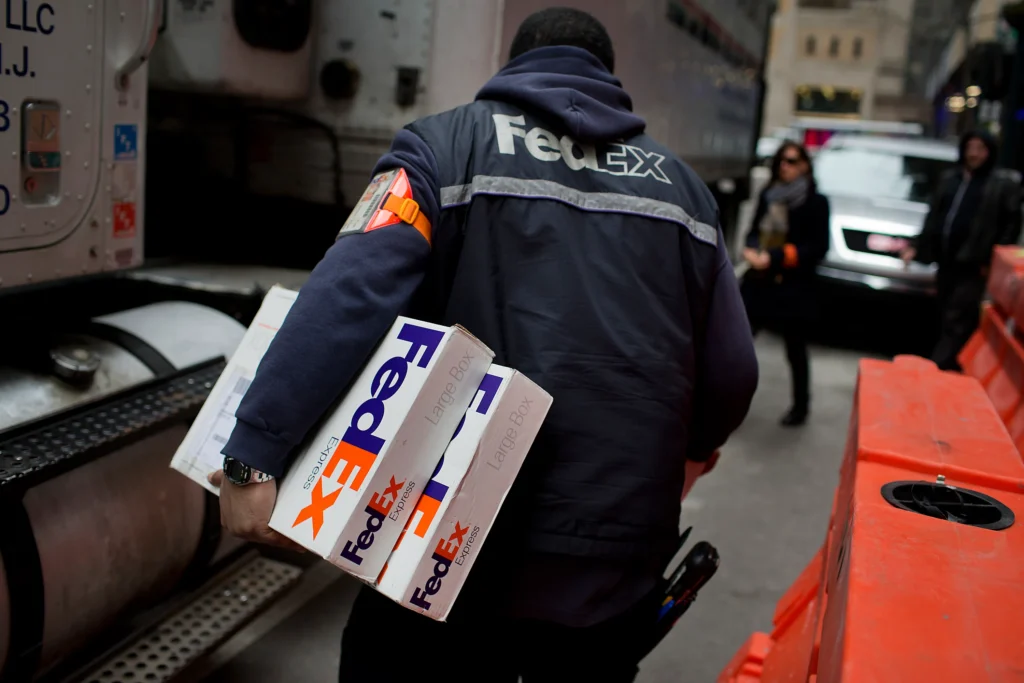
Who’s Involved?
Plaintiffs (the good guys suing): FedEx (based in Tennessee, incorporated in Delaware) and FedEx Logistics (also Tennessee-based, but a New York company). They’re the ones who actually paid these tariffs as “importers” when shipping stuff into the U.S.
Defendants (who collected the money): U.S. Customs and Border Protection (CBP), its boss Rodney S. Scott, and the U.S. government itself. CBP is the agency that checks imports at the border and grabs the duties (taxes).
This is case No. 26-01150 in the U.S. Court of International Trade (CIT)—a federal court just for trade fights.
Why the CIT? Simple Jurisdiction Rule
The Supreme Court just said challenges like this must go to the CIT, not regular courts. It’s like the experts for import disputes. The CIT can order money back, just like any federal judge.
FedEx has “standing” (legal right to sue) because they paid real money due to these tariffs—clear injury that a refund would fix.
The Tariff Drama: A Quick Timeline
Starting February 2025, President Trump (reelected in 2024) used a law called IEEPA (International Emergency Economic Powers Act) to declare “emergencies” and hike tariffs. Here’s the play-by-play in plain terms:
- Feb 1, 2025: Three orders hit Canada (25% extra tax for drug flows), Mexico (25% for border issues), and China (10% more on opioid-related goods).
- More China hits: Quick fixes raised it to 20% by March.
- April blow-up: A “Reciprocal Tariff” on everyone—10% base on almost all imports, plus up to 50% on 57 countries for “trade deficits.” China got slammed to 125%+ (totaling 145% on some stuff!).
These changed the official U.S. tariff book (HTSUS), so CBP made FedEx use new codes and pay up on shipments.
The Court Fights That Made Tariffs Illegal
Other companies sued first in 2025 (V.O.S. Selections v. Trump). CIT ruled them unlawful. Appeals court agreed. Supreme Court sealed it on Feb 20, 2026 (Learning Resources v. Trump): “IEEPA doesn’t let the President impose tariffs.” Boom—illegal from day one.
CBP kept collecting during appeals but said on Feb 22 they’d stop after Feb 24. Too late for FedEx—they already paid on tons of shipments.
How Customs Works (The Boring But Key Part)
When goods arrive:
- You guess and pay estimated tax.
- CBP checks, “liquidates” (final bill) within ~1 year.
- Challenge it? Only sometimes, in 180 days—if it’s not just “ministerial” (robot-like following orders).
FedEx says many entries can’t be protested because CBP had no choice but to collect the unlawful rates. Prior CIT cases say the court can fix this by “reliquidating” (re-doing the math without illegal tariffs).
Government even promised refunds + interest if they lost (which they did).
The Lawsuit’s Main Argument
One big claim: These tariffs break the Supreme Court ruling. Order refunds now!
What FedEx Wants
- Re-do math on old shipments (no illegal tariffs).
- New shipments: Skip the tariffs.
- Full cash back + interest.
- Lawyer fees and costs.
Why This Matters (Even Beyond Trade)
This is executive power in check—President can’t just “emergency” taxes without Congress. For a New York financial crime lawyer or white collar crime lawyer in New York, it’s gold: IEEPA powers sanctions and penalties in money laundering or export cases. If courts nix overreach here, it questions criminal enforcement too—like dodging “illegal” tariffs becoming non-crime.
A criminal defense lawyer NYC might use this to fight forfeitures or fines tied to shaky emergency rules. Businesses: Audit your payments now!
Filed by top lawyers at Crowell & Moring right after the ruling—expect fast action. Could lead to class-action waves.
In short: FedEx turns a Supreme Court smackdown into cash. Smart move, big ripple for anyone watching government wallets.
FAQs
FedEx v. U.S. Customs: FAQs on the Tariff Refund Lawsuit
What is this lawsuit about?
FedEx (Federal Express Corporation and FedEx Logistics, Inc.) sued U.S. Customs and Border Protection (CBP), its Commissioner Rodney S. Scott, and the U.S. government on February 23, 2026, in the U.S. Court of International Trade (CIT, Case No. 26-01150). They’re seeking full refunds—with interest—of unlawful tariffs they paid on imports from Canada, Mexico, China, and other countries. The tariffs were imposed by President Trump starting in February 2025 under the International Emergency Economic Powers Act (IEEPA), but the Supreme Court ruled on February 20, 2026, that IEEPA doesn’t allow the President to impose tariffs like that.
Why were the tariffs illegal?
The Supreme Court, in Learning Resources, Inc. v. Trump (consolidated with V.O.S. Selections, Inc. v. Trump), held 6-3 that IEEPA’s power to “regulate importation” doesn’t include imposing tariffs. This affirmed earlier CIT and Federal Circuit rulings. The tariffs—up to 25% on Canada/Mexico, 145%+ on some Chinese goods, and 10-50% “reciprocal” rates on nearly all other imports—were declared unlawful from the start.
Who are the plaintiffs and defendants?
- Plaintiffs: FedEx companies, acting as “importers of record” who directly paid the duties on goods they imported or shipped for customers.
- Defendants: CBP (the agency collecting duties), Commissioner Scott (official capacity), and the U.S. (statutory defendant). FedEx chose the CIT because the Supreme Court said it’s the exclusive forum for these challenges.
How much money is FedEx seeking?
The complaint doesn’t specify a dollar amount, but FedEx previously estimated a $1 billion hit to 2025 earnings from U.S. trade policies (partly these tariffs). They’re asking for refunds on all IEEPA duties paid, plus interest, costs, and attorneys’ fees. Industry-wide, businesses paid over $175 billion in such duties.
What tariffs are covered?
All those from the “Challenged Tariff Orders”:
- Feb. 2025: 25% on Canada (drugs), Mexico (border), 10-20% on China (opioids).
- April 2025: 10% baseline + reciprocal rates (11-50%) on 57 countries; China escalated to 125%+.
CBP stopped collecting on new entries after Feb. 24, 2026, but past payments are at issue.
How does customs “liquidation” fit in?
Importers pay estimated duties on entry. CBP “liquidates” (finalizes) within ~1 year. Many FedEx entries are liquidated or unprotestable (ministerial application of illegal rates). They want the CIT to order “reliquidation” without IEEPA duties, citing precedents like AGS Co. Automotive Solutions v. CBP.
What does FedEx want the court to do?
- Reliquidate old entries without IEEPA duties.
- Liquidate new ones tariff-free.
- Refund everything paid + interest.
- Cover legal fees.
The government previously promised refunds if the tariffs were ruled unlawful—which happened.
Is this the first lawsuit like this?
It’s the first major one after the Supreme Court ruling and appears to be a “test case.” Others (e.g., Costco, Revlon by the same lawyers) were filed pre-ruling and are pending in CIT.
What has FedEx said publicly?
“FedEx has taken necessary action to protect the company’s rights as an importer of record… No refund process has been established by regulators or the courts. We will communicate updates timely.” They prioritize customer support amid changes.
Will other companies get refunds?
Likely—expect class actions or consolidations. The CIT has broad powers (28 U.S.C. §§ 1585, 2643). Government conceded refunds in prior litigation. Businesses should audit entries now.
What about criminal or financial crime angles?
IEEPA powers sanctions in money laundering/export cases. A criminal defense lawyer Manhattan, New York financial crime lawyer, white collar crime lawyer in New York, or criminal defense lawyer NYC might challenge related penalties/forfeitures if tied to invalid tariffs (e.g., evasion charges). It’s a roadmap for unwinding executive overreach.
What’s next for the case?
CIT moves fast on trade cases. Government may argue mootness (new entries) or immunity. Ruling could come in months, potentially triggering refunds industry-wide. President Trump announced new 15% tariffs under different law (Trade Act of 1974, limited to 150 days).
Where can I read the complaint?
Publicly available via CourtListener or CIT docket (gov.uscourts.cit.19237, Document 2). Lawyers: Crowell & Moring (Daniel W. Wolff et al.).